

Global Wearable Bioelectronic Skin Patches Market Growth, Size, Trends Analysis- By Type, By Application, By End Use– Regional Outlook, Competitive Strategies and Segment Forecast to 2034
Global Wearable Bioelectronic Skin Patches Market Growth, Size, Trends Analysis- By Type, By Application, By End Use– Regional Outlook, Competitive Strategies and Segment Forecast to 2034
| Published: Jan-2026 | Report ID: MEDE2604 | Pages: 1 - 1 | Formats*: |
| Category : Medical Devices | |||
According to SPER Market Research, the Global Wearable Bioelectronic Skin Patches Market is estimated to reach USD 50.35 billion by 2034 with a CAGR 14.95%.
Introduction and Overview
The report includes an in-depth analysis of the Global Wearable Bioelectronic Skin Patches Market, including market size and trends, product mix, Applications, and supplier analysis.
The global Wearable Bioelectronic Skin Patches Market was valued at USD 12.5 billion in 2024 and is expected to grow at a CAGR of over 14.95% from 2025 to 2034. The market is witnessing strong growth due to increasing demand for non-invasive and continuous health monitoring solutions, along with rapid advancements in flexible and stretchable electronics. These patches enable real-time tracking of physiological parameters, supporting remote patient monitoring, personalized care, and preventive healthcare. Rising prevalence of chronic diseases, growing adoption of digital health technologies, and increasing health awareness are further driving market expansion across clinical, homecare, and consumer wellness applications.
By Type:
The electrochemical sensors segment dominates the wearable bioelectronic skin patches market by type, holding the largest revenue share of around XX% in 2024. This dominance is primarily attributed to their ability to provide accurate, real-time biochemical measurements, including glucose, lactate, and electrolyte levels, which are critical for continuous health monitoring and chronic disease management, particularly diabetes. Electrochemical sensors offer high sensitivity, low power consumption, and strong compatibility with flexible and stretchable materials, making them ideal for skin-conformal wearable patches. Their widespread adoption across medical and wellness applications continues to support sustained market leadership.
By Application:
The medical monitoring segment dominates the wearable bioelectronic skin patches market by application, generating the highest revenue share. This is driven by the growing use of wearable patches for continuous monitoring of vital health parameters outside traditional clinical settings. These devices are widely used for managing chronic conditions such as cardiovascular diseases and diabetes, enabling early detection and timely intervention. Medical monitoring patches help reduce hospital visits, support remote patient monitoring, and improve patient outcomes through proactive and personalized care, making them a key contributor to overall market growth.
By End Use:
The home care settings segment is gaining significant traction in the wearable bioelectronic skin patches market by end use. This growth is driven by the increasing adoption of remote patient monitoring solutions that allow continuous tracking of health parameters in a non-clinical environment. Wearable skin patches enable patients to manage chronic conditions from home, reducing the need for frequent hospital visits and shortening hospital stays. The shift toward home-based care, rising healthcare costs, and growing preference for patient-centric and convenient monitoring solutions are further supporting the expansion of this segment.
Regional Insights:
The North America region dominates the wearable bioelectronic skin patches market, led by the U.S. and Canada, due to advanced healthcare infrastructure, early adoption of digital health technologies, and strong presence of key market players. Europe follows, with significant contributions from Germany, the UK, France, Spain, Italy, and the Netherlands, supported by rising healthcare digitization and favorable regulatory frameworks. The Asia Pacific region is witnessing the fastest growth, driven by expanding healthcare access and increasing adoption in China, Japan, India, Australia, and South Korea. Latin America and the Middle East and Africa show steady growth supported by improving healthcare systems.
Market Competitive Landscape:
The Wearable Bioelectronic Skin Patches Market is highly consolidated. Some of the market key players are 2M Engineering, Abbott Laboratories, Biolinq, Baxter International, Boston Scientific, Dexcom, Epicore Biosystems, Inc., GE Healthcare Technologies Inc., GENTAG, Inc., Insulet Corporation, iRhythm Technologies, Inc., Koninklijke Philips N.V., LifeSignals, Inc., Medtronic plc, Sinocare, SmartCardia Inc., VitalConnect, VivaLNK, Inc.
Recent Developments:
• In October 2024, Researchers developed a skin patch that used inappreciable electric currents to control bacterial infections without medicines. The platoon, led by Bozhi Tian of the University of Chicago, demonstrated that small electric currents could widely impact Staphylococcus epidermidis bacteria in acidic surroundings similar as healthy skin. This discovery offered a promising, medicine-free volition for treating infections and addressing antibiotic resistance challenges.
• In April 2024, Philips partnered with smartQare to integrate its viQtor result with Philips’ clinical monitoring platforms, enabling nonstop case monitoring in and out of hospitals across Europe. As part of the agreement, smartQare acquired Philips’ Healthdot business to combine wearable bioelectronic skin patches with remote monitoring on a unified platform. This collaboration helped Philips streamline remote care immolations, reduce clinical workload, and strengthen its position in the European wearable health technology request.
Scope of the report:
Report Metric Details
Market size available for the years 2021-2034
Base year considered 2024
Forecast Period 2025-2034
Segments Covered By Type, By Application, By End Use
Regions Covered North America, Latin America, Asia-Pacific,
Europe, and Middle East & Africa
Companies Covered 2M Engineering, Abbott Laboratories, Biolinq, Baxter International, Boston Scientific, Dexcom, Epicore Biosystems, Inc., GE Healthcare Technologies Inc., GENTAG, Inc., Insulet Corporation, iRhythm Technologies, Inc., Koninklijke Philips N.V., LifeSignals, Inc., Medtronic plc, Sinocare, SmartCardia Inc., VitalConnect, VivaLNK, Inc.
Key Topics Covered in the Report
• Global Wearable Bioelectronic Skin Patches Market Size (FY’2021-FY’2034)
• Overview of Global Wearable Bioelectronic Skin Patches Market
• Segmentation of Global Wearable Bioelectronic Skin Patches Market by Type (Electrochemical sensors, ECG sensors, Temperature sensors, EMG sensors, other types)
• Segmentation of Global Wearable Bioelectronic Skin Patches Market by Application (Fitness and wellness, Medical monitoring, Other applications)
• Segmentation of Global Wearable Bioelectronic Skin Patches Market by End Use (Hospitals and clinics, Home care settings, other end use)
• Statistical Snap of Global Wearable Bioelectronic Skin Patches Market
• Expansion Analysis of Global Wearable Bioelectronic Skin Patches Market
• Problems and Obstacles in Global Wearable Bioelectronic Skin Patches Market
• Competitive Landscape in the Global Wearable Bioelectronic Skin Patches Market
• Details on Current Investment in Global Wearable Bioelectronic Skin Patches Market
• Competitive Analysis of Global Wearable Bioelectronic Skin Patches Market
• Prominent Players in the Global Wearable Bioelectronic Skin Patches Market
• SWOT Analysis of Global Wearable Bioelectronic Skin Patches Market
• Global Wearable Bioelectronic Skin Patches Market Future Outlook and Projections (FY’2025-FY’2034)
• Recommendations from Analyst
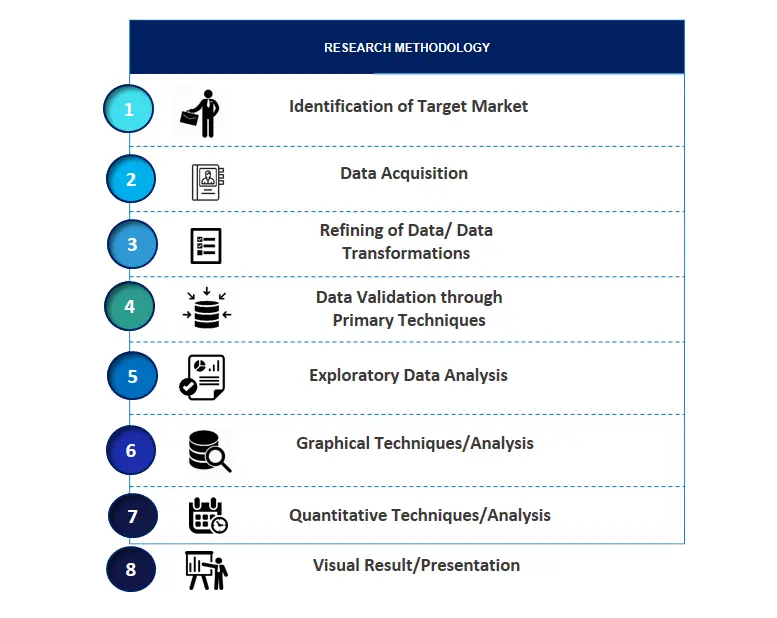
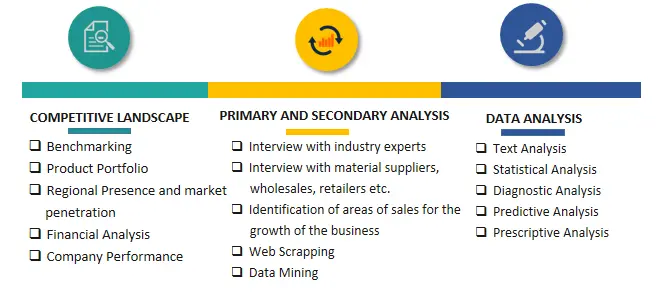
SPER Market Research’s methodology uses great emphasis on primary research to ensure that the market intelligence insights are up to date, reliable and accurate. Primary interviews are done with players involved in each phase of a supply chain to analyze the market forecasting. The secondary research method is used to help you fully understand how the future markets and the spending patterns look likes.
The report is based on in-depth qualitative and quantitative analysis of the Product Market. The quantitative analysis involves the application of various projection and sampling techniques. The qualitative analysis involves primary interviews, surveys, and vendor briefings. The data gathered as a result of these processes are validated through experts opinion. Our research methodology entails an ideal mixture of primary and secondary initiatives.
Frequently Asked Questions About This Report
PLACE AN ORDER
Year End Discount
Sample Report
Pre-Purchase Inquiry
NEED CUSTOMIZATION?
Request CustomizationCALL OR EMAIL US
100% Secure Payment






Related Reports

Have a glance of the Report

Our Global Clients
Our data-driven insights have influenced the strategy of 200+ reputed companies across the globe.